
In 2021, I was hired by Megaherz, a film production company from Germany, to work as a fixer in Brazil for the production of Tobi Krell’s feature film, Checker Tobi and the Journey to the Flying Rivers. My mission was to travel to the Amazon region, visit a couple of Indigenous villages, and find the right community in which to film an important segment of the feature.
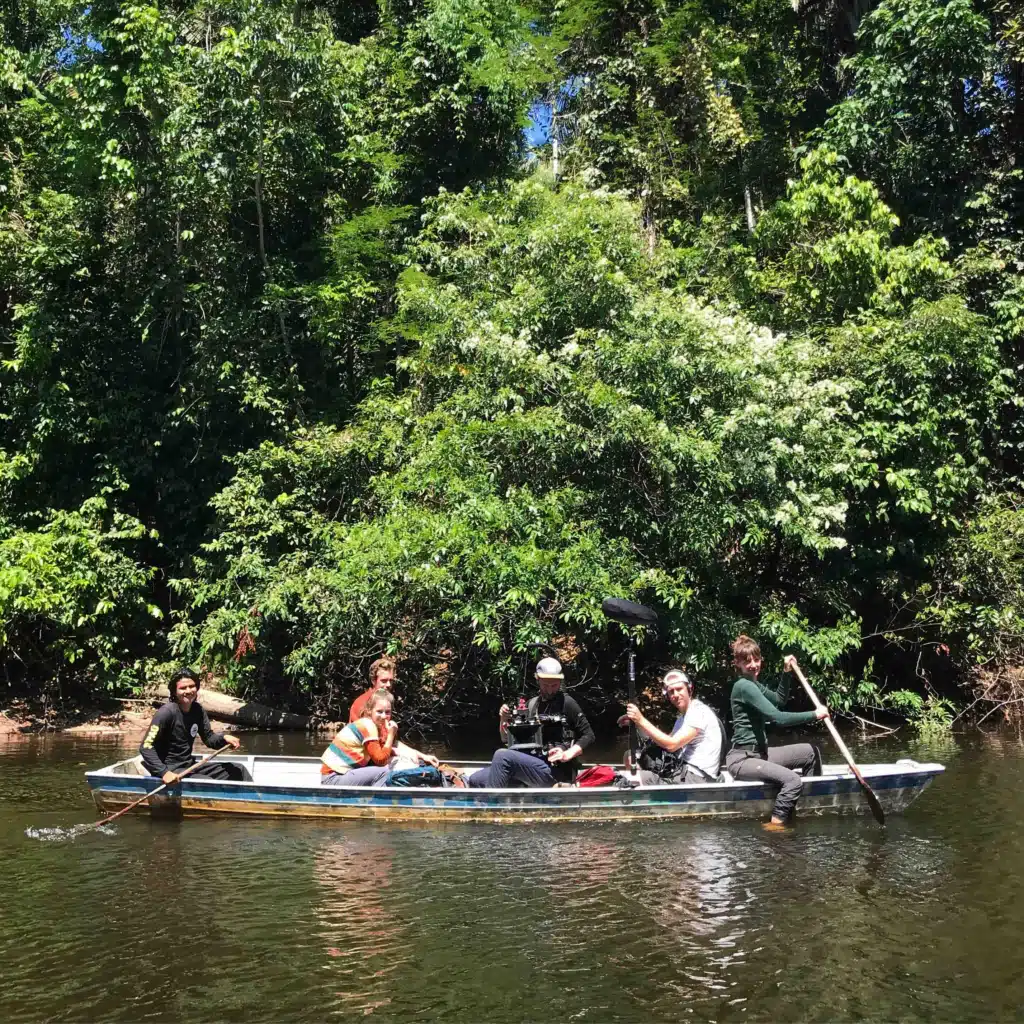
When you are in the early stages of a production, research and a good location scout are key to achieving success when your audience finally watches the film on screen. This becomes even more important when filming in the Amazon, where distances, access, local relationships and logistics can determine whether a production succeeds or fails.
The director wanted to show the impact of fires in the Amazon rainforest, and the news indicated that Rondônia was the place to go. Fires were increasing in the region that year, and I had already been there before, so I had some contacts to start my research. Reliable people are a producer’s best friends.
After a few days of office work, with many phone calls, WhatsApp messages, and emails, I finally got in touch with two caciques (Indigenous community leaders) and was ready to fly to Porto Velho and drive to the villages to meet the communities and gather all the information I could. I would then send everything to the director and producers so they could decide which community would be the best fit for the shoot.
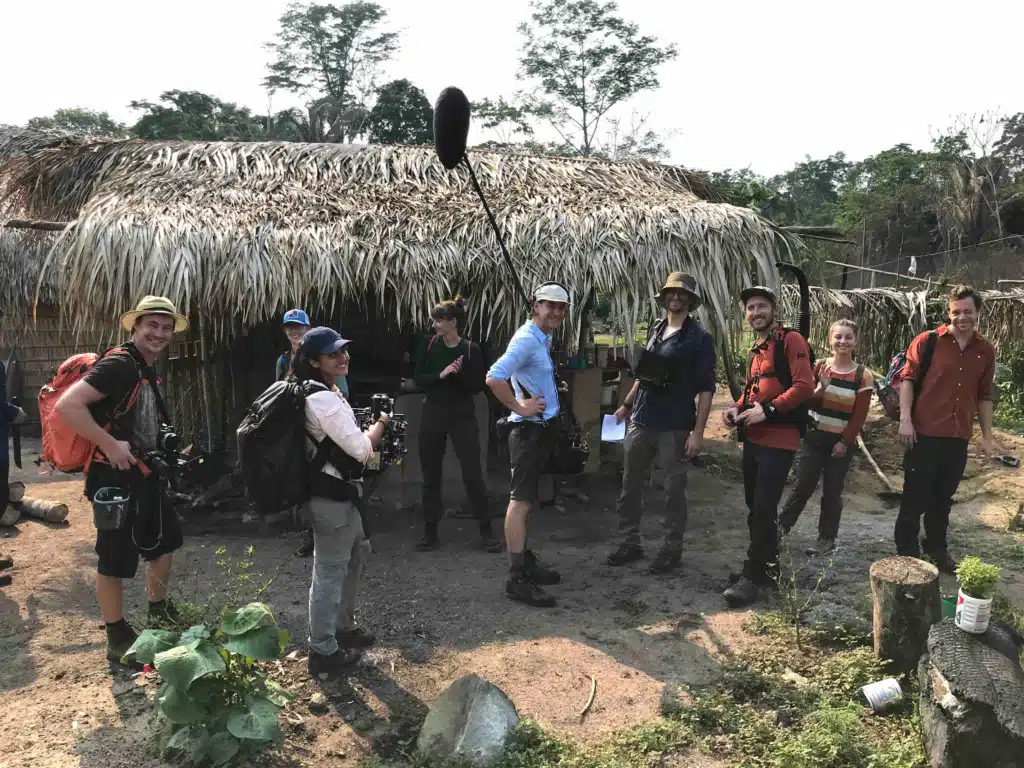
One of the communities, the Uru-Eu-Wau-Wau, had already been portrayed in the documentary The Territory. The other, the Tenharim, had created an Indigenous fire brigade. So I had a good chance of finding the right place to shoot with one or the other.
This is one of the most important aspects of location scouting in the Brazilian Amazon: a location needs to work not only visually, but also in terms of characters, access, logistics, permissions, safety and the relationship between the production and the local community.
The flight from São Paulo to Porto Velho, the capital of Rondônia, takes almost four hours, so when you include getting to the airport and then to the hotel, it basically takes a full day to travel to the region.
My first destination was the Tenharim territory, about a five-hour drive from Porto Velho (yes, distances matter a lot in the Amazon region). I met my longtime friend Roberto, an experienced driver who used to drive trucks and now takes tourists on fishing trips in the region — and fixers to visit Indigenous territories.
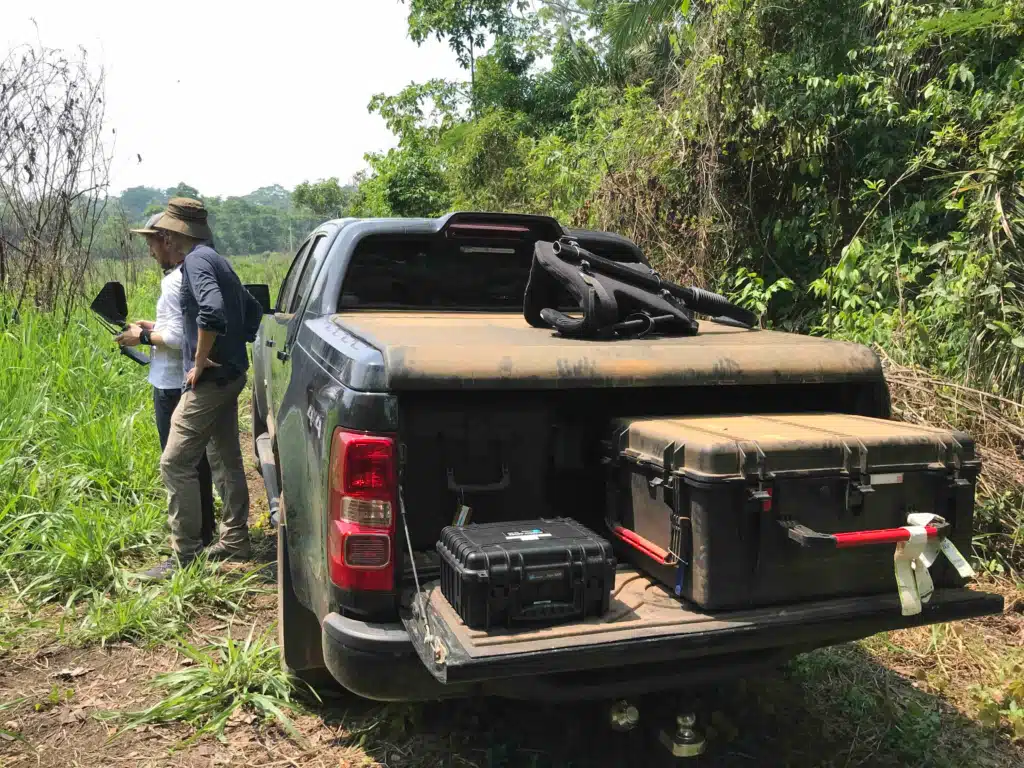
We left the hotel early and headed onto the highway, part of the iconic Trans-Amazonian Highway, toward our destination. I remember that, as it was the dry season, the road was extremely dusty, and we passed many trucks, most of them loaded with timber — some legal, some illegal.
When we got to Humaitá, where we had planned to meet the Tenharim cacique and follow him to the Indigenous village, things started to feel strange.
He was driving an official government vehicle and asked me to pay for the fuel to fill his tank so he could drive to the territory. As I discovered at that moment, he was working for the government’s Indigenous affairs agency. There was nothing wrong with that, of course, but I was not supposed to pay for fuel for an official government vehicle, as that could be considered an improper payment.
Another Indigenous man, a friend of his, said he had some cash and paid for the fuel. I scratched my head, got back into Roberto’s 4×4 pickup, and we started driving, following their car.
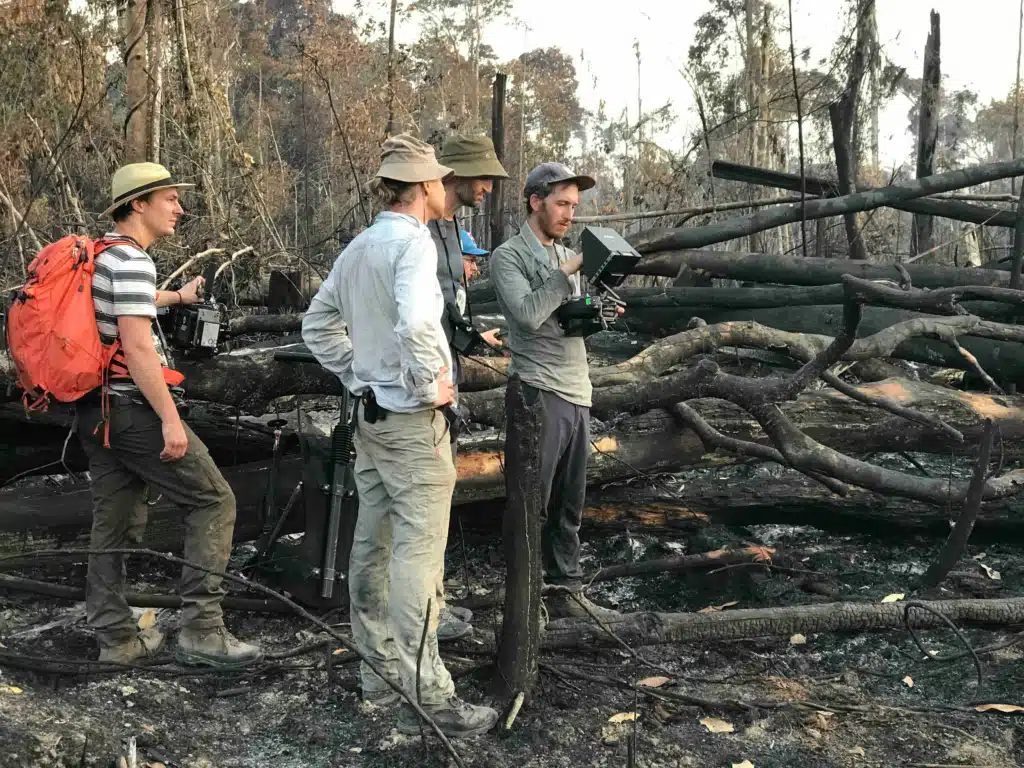
The scenery was bleak — miles and miles of deforestation, occasional small fires, and a lot of smoke in the air. That was relevant to the story we wanted to tell, but I also needed to find some pristine forest.
We stopped for a quick lunch at a local restaurant, and after another couple of hours bumping along the road, we finally arrived at the village.
I had only two hours to talk to the community, take pictures, fly the drone, and understand the possibilities of filming there.
My tasks included figuring out accommodation for the film crew — which would mean camping — electricity, how we would prepare meals, identifying possible characters for the film, and scouting the location. All of this in just two hours. That was far from ideal, but it was the reality of the production because of the budget constraints and timeframe I had to work with.
This is also why film production in remote areas of Brazil requires research well before the international crew arrives. A scout needs to answer practical production questions while also understanding the people and environment that will become part of the story.
One of the things I needed to discuss with the community was a donation as compensation for filming there. Since I was already concerned about some of the cacique’s behavior, I wanted to make sure that, if we decided to shoot there, there would be no problems or unexpected costs later.
But his position remained ambiguous. While inviting the crew to film in the village, he did not want to confirm the amount of the donation. He also kept telling me that I should hire a particular woman as a cook, some young people to help carry the equipment, and another person to work as our local guide — even though I had already explained the budget available for the shoot. For me, this was a warning sign. I became concerned that additional costs could continue to appear after the international crew had already arrived at the village. It was a type of situation I had heard about before and something I knew we needed to be careful about.
I finished the visit and told them that I would get back in touch within a couple of days to confirm whether or not we would film there.
The following day was the exact opposite. My friend Roberto drove me to the Uru-Eu-Wau-Wau village, where I met my main contact, Bitaté, and the rest of the community.
I was completely transparent about the budget we had available as a donation to the community. I explained that we would also be willing to pay an additional amount to each person who participated in the film, and that we would take care of our own camping equipment and meal preparation, bring our own cook and hire an assistant to help him. They were happy to collaborate and assured me that there would be no unexpected surprises (meaning, hidden costs) during the shooting days.
They showed me around the village, invited me into a couple of homes, and took me to a beautiful river surrounded by pristine forest. I was able to get all the photographs and information I needed for the scout. The people were extremely welcoming and happy to collaborate with the production. It was clear to me that we could build a mutually beneficial relationship with the community. Trust had been established, and I could fly back to São Paulo confident that I had found the right location for the shoot.
If you care about working ethically — and you should — you need to surround yourself with people who also care about ethics. A film crew traveling to a distant location, spending days filming in the forest, and working with people from very different cultural backgrounds will inevitably face challenges along the way. But if you start in the wrong place, with the wrong people, those challenges can quickly become much bigger problems.
So, once again, research and a good scout — of both the characters and the locations a producer will ultimately deliver to the film crew — are among the first and most important steps toward the success of the film on screen.
For international filmmakers planning to film in the Brazilian Amazon, this is also where experienced local production support becomes particularly valuable. Research, location scouting, local relationships, logistics and an understanding of how production works in different regions of Brazil all begin long before the cameras arrive.
If we want to leave Plato’s cave and see the light, we need to research. Truth does not simply reveal itself to us; we need to look for it, to investigate reality and find what may be hidden beneath the surface.
And to get the right information, we need to ask the right questions — to use the Socratic method and ask, ask, ask until we find the right answers. One of the most important things to pay attention to is contradictions, which are at the essence of what is false. A researcher’s most important virtue is integrity — to remain coherent with one’s own values.
At Fixer Brazil, this research and scouting process is an important part of the production services we provide to international documentary, television, corporate and branded-content crews filming throughout Brazil.