
Filming in the Brazilian Amazon can be one of the most rewarding experiences for documentary filmmakers, but it also presents unique challenges involving logistics, weather, equipment, transportation, security and access to remote locations.
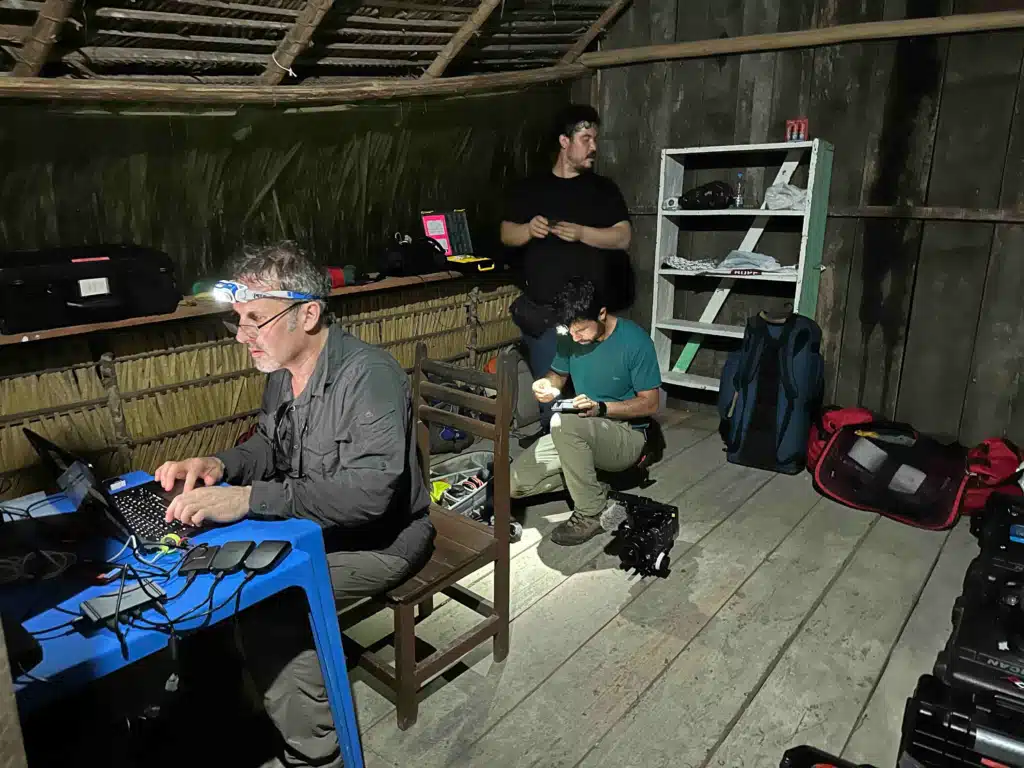
In this behind-the-scenes conversation from the Fixer Brazil Podcast, director Richard Ladkani shares his experience filming YANUNI deep in the Amazon rainforest and explains how the production adapted to one of Brazil’s most demanding filming environments.
The documentary follows Indigenous leader Juma Xipaia and combines an intimate personal story with the environmental and social challenges facing the Amazon.
Fixer Brazil supported the production locally in Brazil, helping with production logistics, permits and coordination during different stages of filming.
Reaching Remote Filming Locations in the Amazon
One of the first challenges of filming in the Amazon is simply getting to the location.
To reach the Indigenous territory where part of YANUNI was filmed, the production first traveled through cities such as Altamira and Santarém before continuing by small aircraft.
Richard recalls flying for hours above seemingly endless rainforest, rivers and remote landscapes. Indigenous territories can be located far from commercial airports, which means productions may need to choose between long journeys by boat or chartering small aircraft capable of reaching remote airstrips.
For an international film crew, this also means carefully planning the amount and weight of camera equipment, batteries, drones, sound equipment and personal luggage that can be transported.
Protecting Film Equipment in the Amazon Rainforest
Weather is another major consideration when planning a film production in the Brazilian Amazon.
During the rainy season, humidity and heavy rainfall can become a constant part of production. Cameras, lenses, drones, batteries and media need to be protected while the crew continues working in difficult conditions.
At the Indigenous village, the YANUNI crew established a protected area for storing equipment, charging batteries and managing footage. Every evening, while the generator was operating, the team downloaded and backed up the material recorded during the day.
In remote locations, where replacing a damaged camera or hard drive may be impossible without days of travel, equipment protection and data management become essential parts of the production workflow.
Working With a Small Documentary Crew
One of the most interesting aspects of YANUNI was the decision to keep the film crew extremely small.
Brazilian cinematographer Fábio Nascimento worked alongside Richard during part of the production, operating a second camera and drone. Having two cameras allowed the filmmakers to capture events from different perspectives without asking participants to repeat actions for the camera.
But as filming progressed, the production became even smaller.
For approximately 60 percent of the documentary, Richard says he filmed alone.
The reason was not simply logistical. It was also a creative decision.
“Intimacy was the most important thing for this production.”
Richard wanted to remain close to Juma and the other characters without allowing the presence of a large film crew to influence what was happening around them.
This is an important consideration for documentary production in Brazil—or anywhere else. Sometimes a smaller crew can provide filmmakers with access and intimacy that would be impossible with a traditional production footprint.
Capturing the Brazilian Amazon Through Juma’s Perspective
The Amazon rainforest is not simply a location in YANUNI. It is an important part of the story.
Richard explains that Juma sees the forest as a source of energy, life and healing. His cinematography therefore needed to communicate her emotional relationship with the environment.
While walking through the rainforest, he searched for small visual moments: rain falling from leaves, backlight passing through vegetation, macro details and slow-motion images of the forest.
The objective was not simply to create beautiful footage of the Amazon, but to photograph the forest from the perspective of the film’s central character.
Security and Local Production Support in Brazil
Filming conditions changed considerably when the production moved from remote Indigenous territories into cities such as Altamira.
Security became an important part of production planning. Richard explains that the crew worked discreetly, relied on local information and continuously evaluated potential risks to Juma, her family and the production itself.
For international productions filming in remote areas of Brazil, local production support can therefore involve much more than transportation and accommodation.
Depending on the project, production planning may include location research, local crews, transportation, permits, equipment logistics, security assessment, Indigenous territory access and coordination with local communities and authorities.
Watch: Behind the Scenes of YANUNI in Brazil
In the video below, Richard Ladkani watches behind-the-scenes footage from YANUNI and explains what it was really like to film the documentary in the Brazilian Amazon.
Watch the video and discover more about filming YANUNI in Brazil.
You can also watch the full interview with Richard Ladkani on the Fixer Brazil Podcast, where we discuss his career, documentary filmmaking, YANUNI, filming in the Amazon and his experiences making films around the world.
Planning a Film Production in Brazil?
Fixer Brazil provides production services for international crews filming throughout Brazil, including documentary, factual television, branded content and commercial productions.
Our services include local production coordination, location research, Brazilian film permits, crew and equipment, logistics, transportation, drone coordination and support for productions filming in remote locations.
For more information about filming in Brazil or planning a production in the Brazilian Amazon, contact Fixer Brazil.