
PERMITS FOR
FILMING IN BRAZIL
PERMITS FOR
FILMING IN BRAZIL
Filming in Brazil requires a solid understanding of local regulations and a comprehensive permitting process that protects the country’s cultural, natural and historical heritage. Any international production must secure official authorization before cameras roll. Fixer Brazil specializes in supporting foreign crews who are filming in Brazil, handling every stage of the permit workflow so your production remains fully compliant, safe and efficient in any Brazilian location.
HERE'S WHY PERMITS MATTER WHEN FILMING IN BRAZIL
Brazil enforces a regulatory system that ensures filming in Brazil happens responsibly. Permits are required to guarantee safety measures, protect Indigenous communities, limit environmental impact, and reduce disturbances in public areas. When filming in major cities like Rio de Janeiro, São Paulo or in remote territories across the Amazon rainfores,t approvals ensure that every activity aligns with legal and cultural expectations. Working with Fixer Brazil means peace of mind while filming in Brazil, with zero bureaucratic stress.

FEDERAL PERMITS
Foreign productions filming in Brazil must secure authorizations at a federal level depending on what they are filming, where, and who is involved. Fixer Brazil manages every step in contact with each national authority to ensure your production remains fully legal across the entire Brazilian territory.
ANCINE: National Film Agency
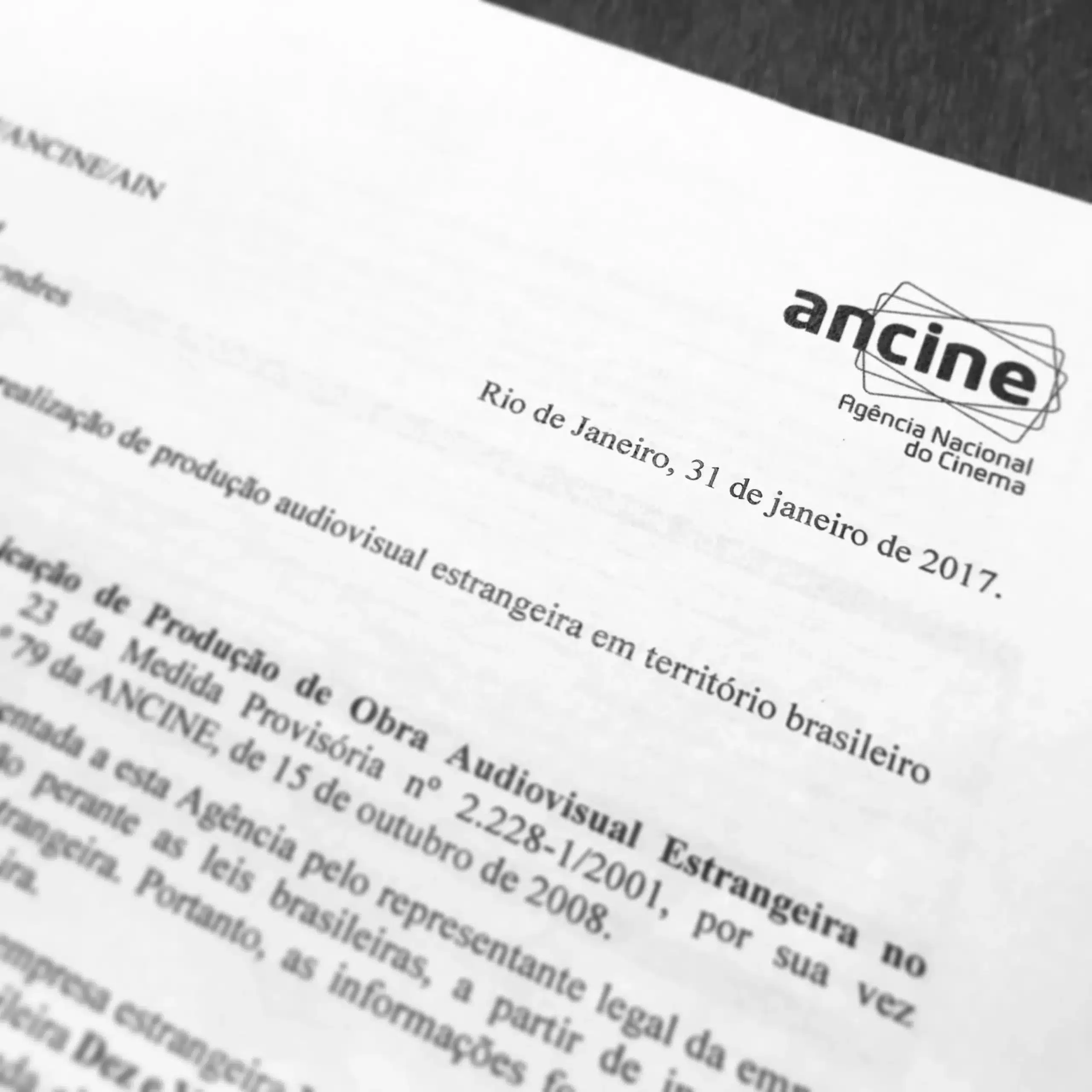
ANCINE is the main authority responsible for regulating international productions filming in Brazil. Any documentary, commercial, branded content or feature film involving foreign crews must be registered with ANCINE before shooting begins. This registration ensures the project complies with local professional standards, contractual regulations and legal responsibilities. Fixer Brazil prepares all documentation, acts as the required Brazilian production partner and accelerates approval to keep pre-production on schedule.
ICMBio: Chico Mendes Institute
Productions filming in Brazil within national parks, environmental reserves, marine protection areas or any federally protected ecosystem must obtain authorization from ICMBio. The process may include environmental impact review, script analysis and the appointment of supervision personnel onsite. Fixer Brazil guides teams through all ecological guidelines to ensure a respectful and responsible approach to natural environments.
IBAMA: Environmental and Wildlife Authority
IBAMA approvals are required when filming in Brazil directly affects wildlife, when animals are featured, or when environmental interactions extend outside protected parks. Wildlife handling rules, safety protocols and ecological conservation measures must be followed. Our team ensures all environmental responsibilities are legally documented.
FUNAI: National Indigenous Foundation
Any project filming in Brazil that involves Indigenous lands or portrays Indigenous communities requires approval from FUNAI. This process includes cultural assessment, community consultation and consent to ensure respect, accuracy and ethical collaboration. Fixer Brazil manages communication with Indigenous leadership and ensures all work is built on trust and transparency.
IPHAN: National Heritage Institute
Approval from IPHAN is necessary when filming in Brazil touches federally protected monuments, archaeological sites, historical buildings or cultural heritage landscapes. These areas often require strict preservation protocols and supervision. We coordinate access, permissions and logistics to protect the integrity of these national assets.
Aerial Filming & Drone Permits – ANAC and Military Authorities
Drone filming in Brazil is regulated by ANAC and may also require authorization from the Air Force or Army for restricted airspace, borders, ports, bridges and high-security zones. Fixer Brazil prepares flight maps, operator certifications and operational compliance so aerial cinematography runs smoothly and legally.


STATE AND MUNICIPAL FILMING PERMITS IN BRAZIL
In addition to federal regulations, productions filming in Brazil must comply with state and municipal laws that govern public spaces, local heritage, urban impact and – in many cases – drone operations. Each city and region has its own procedures, authorities and timelines. Fixer Brazil coordinates with every relevant institution to ensure total compliance and smooth logistics wherever filming in Brazil takes place.
RioFilme: Rio de Janeiro Film Commission
RioFilme is responsible for authorizing filming in Brazil when the production takes place in public spaces within the city of Rio de Janeiro, including beaches, squares, parks, mountain viewpoints and iconic areas such as Lapa and the Copacabana coastline. Approvals may involve traffic control, safety coordination, equipment placement restrictions and drone flight management. Fixer Brazil handles the entire application process, ensuring that production activities run efficiently and without local interruptions in Rio.
SPCine: São Paulo Film Commission
SPCine manages permitting for filming in Brazil inside the city of São Paulo, covering streets, highways, public buildings, transport hubs and large occupation zones. Depending on the level of urban intervention, additional city departments may become involved, such as municipal security forces and road authorities. Fixer Brazil ensures requests are presented correctly from the beginning so timelines stay tight and shooting in São Paulo remains production-friendly.
State-Level Film Commissions
Several Brazilian states, including Bahia, Pernambuco, Pará, Minas Gerais and the Federal District (Brasília), operate their own audiovisual offices that regulate filming in Brazil within their jurisdiction. These approvals are important for productions set beyond major capitals, especially in cultural hubs or natural landscapes. Requirements vary from region to region, and Fixer Brazil evaluates each case based on environmental sensitivity, tourism policies and public interaction.
Municipal and Local Authorities
When filming in Brazil takes place in smaller towns, rural areas or unique locations not covered by official film commissions, specific municipal authorities regulate access and authorization. These include city halls, local environmental agencies and tourism departments. Fixer Brazil aligns with local leaders and institutions to ensure permits respect the community and its operational routines, while maintaining the needs and urgency of the production.


ADDITIONAL PERMISSIONS FOR FILMING IN BRAZIL
Beyond the well-known national, state and municipal permits, international productions may require additional authorizations depending on the project’s nature, location and cultural sensitivity. Fixer Brazil handles every layer of compliance so your filming in Brazil remains smooth and uninterrupted. Productions involving controlled substances, firearms, special effects, drones or restricted infrastructure often demand approvals from multiple authorities. When filming with minors, we secure legal guardianship documentation and judicial permissions, ensuring full protection of child labor regulations in Brazil. Projects featuring professional actors, athletes or celebrities may require union authorization and licensing for commercial use.
Cultural heritage protection also plays a crucial role in Brazil. Any filming in historical sites, Indigenous lands, archaeological remains or UNESCO areas must respect Brazilian laws that preserve cultural identity and public interest. We ensure the production follows ethical and legal standards, including approvals from IPHAN (Instituto do Patrimônio Histórico e Artístico Nacional) when heritage assets are involved. Our team also handles drone flight clearances with ANAC and local airspace authorities, ensuring safe aerial filming in Brazil in both urban and remote areas.
By managing these approvals with precision, Fixer Brazil guarantees full legitimacy for your story while preserving the country’s environmental and cultural treasures.
Equipment Import &
Customs for Filming in Brazil
Bringing professional equipment into Brazil requires strict compliance with customs and tax regulations, especially for commercial audiovisual productions. To keep your logistics efficient and avoid costly delays, Fixer Brazil manages all formal procedures for film gear entry through the ATA Carnet system or temporary import processes. Whether you are transporting cinema cameras, lenses, lighting or underwater rigs, we ensure your equipment is properly registered, documented and authorized for use throughout your filming in Brazil schedule.
Our customs specialists coordinate directly with airport authorities and bonded warehouses to secure fast clearance, minimizing time on the ground and preventing unexpected fines or confiscations. For productions renting equipment locally, we advise on certified suppliers in São Paulo, Rio de Janeiro and other major hubs, with competitive rates that often reduce international shipping needs.
Brazilian customs procedures can be complex, but with the right local partner, they do not become a barrier. Fixer Brazil provides strategic support from pre-arrival document planning to export assistance at wrap-out — ensuring your team arrives ready to shoot and leaves without complications.
FAQ
WHAT YOU NEED TO KNOW BEFORE FILMING IN BRAZIL
What film/video categories are subject to mandatory prior notification to ANCINE?
With the exception of journalistic productions, all foreign audiovisual productions must comply with this requirement.
Is the foreign producer required to make this prior notification?
No. The foreign producer must enter into partnership with a Brazilian producer registered with ANCINE, who will report to our Agency on behalf of the foreign producer.
What actions is the Brazilian producer asked to perform?
In addition to acting as a channel of communication with ANCINE, the Brazilian producer is responsible for ensuring compliance to the legislation and for providing assistance for customs clearance of equipment as well as other forms of assistance.
How is the advance notice given?
The Brazilian producer informs ANCINE of their interest and responsibilities in such shooting/recording trough the Brazilian Government Services Portal.
What documents should the Brazilian producer submit to ANCINE?
The following documents are required (documents need not be certified):
a) a copy of the contract between the foreign production company – or their legal representative for the purposes of shooting/recording in Brazil – and the Brazilian producer, specifying mutual responsibilities, agreed form of remuneration and the duration of the contract;
b) a copy of the translation into Portuguese of the contract referred to above, when not originally written in Portuguese;
c) an initial shooting / recording plan specifying locations (town or city / state in Brazil) and dates;
d) a copy of the passport identification page for each foreign professional entering the country.
Who has the authority to issue entry visas for Brazil?
Visas are issued by Brazilian diplomatic representations abroad. Once eligibility requirements are met, ANCINE will issue a notification to the diplomatic representation concerned, which will then grant entry visas for foreign professionals. A copy of the notification is sent to the Brazilian producer.
Who determines the period of validity of the visa?
The period of validity of the visa is determined by the relevant Brazilian diplomatic authority in accordance with the shooting/recording schedule presented on application.
How long does it take for ANCINE to respond to prior notification?
ANCINE will respond to the request within five (5) business days, provided that the documentation is complete.
What should be done in the event of modifications to the shooting plan submitted to ANCINE?
Any later modification should be reported to ANCINE trough the Brazilian Government Services Portal. Listed below are the most significant modifications:
a) change of Brazilian diplomatic representation office;
b) changing of technicians or artists;
c) extension and / or change of the technicians’ or artists’ period of stay;
d) change in locations;
e) cancelation of the shooting/filming.
What agency should one contact in Brazil for customs related matters?
The Secretariat of the Federal Revenue of Brazil (“Receita Federal do Brasil”).
What other official sources of information for foreign producers are there?
For information on locations, contacts with the private sector, among other topics, please contact regional Film Commissions.